Living Heritage

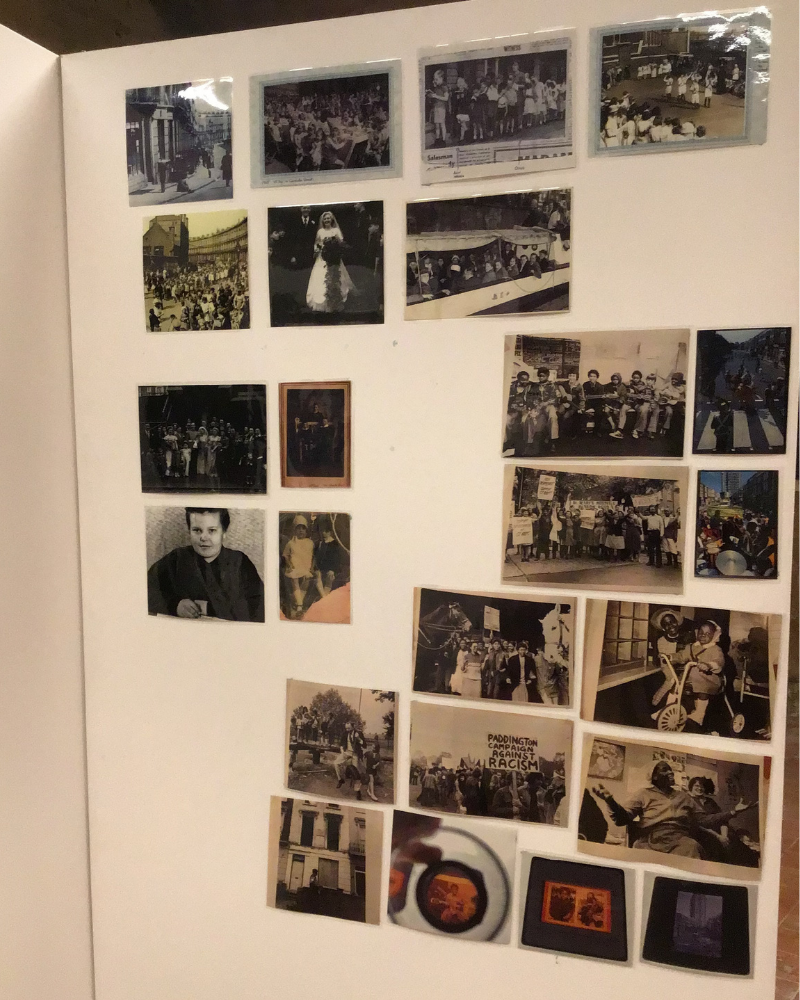
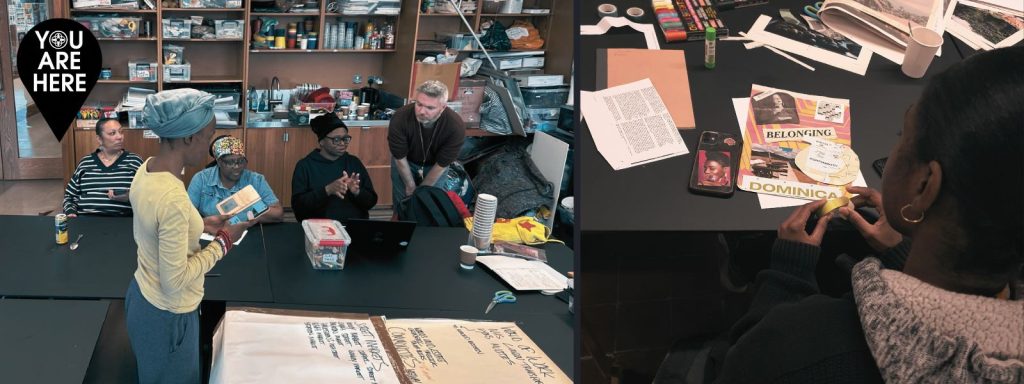
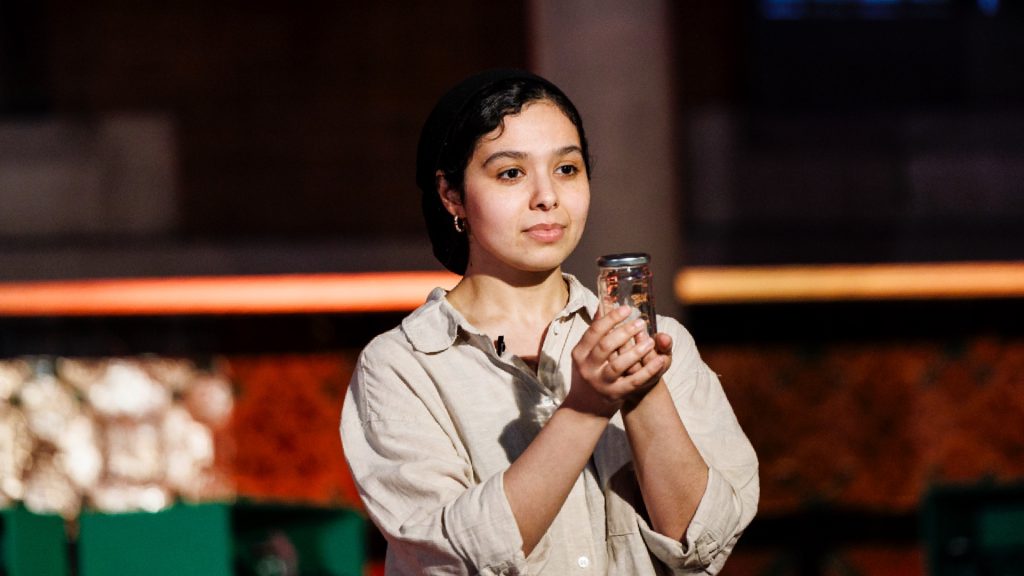
Since 2017, Grand Junction’s Heritage Volunteers have been uncovering the history of the building and the wider Paddington area through archival research, oral history interviews and personal stories. Their work has taken many forms, from podcasts and video essays to research articles and other resources.

Explore Paddington’s past through the voices, memories and perspectives of the people who have helped bring its history to life

Oral Histories

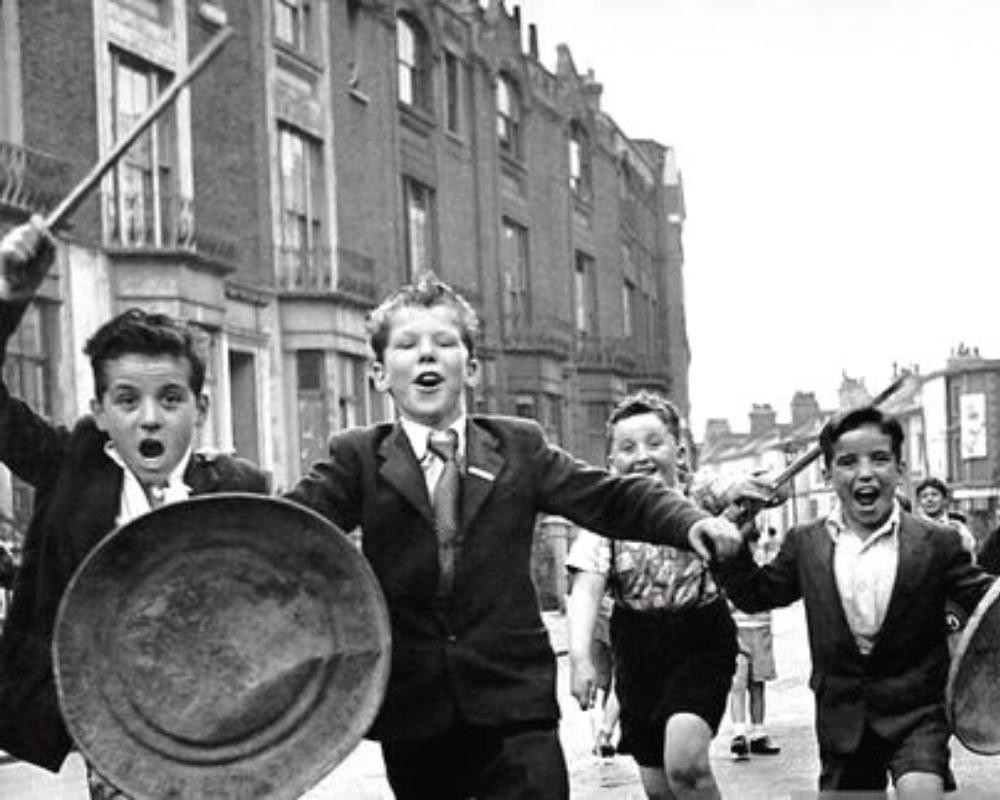
Collecting first-hand accounts of people’s experiences, memories and perspectives is a unique and impactful way to deepen insight and build a detailed and accurate record of people’s everyday lives, their attitudes to social issues, and changes to a community.

North Paddington is an area that is often overlooked. It is fragmented and diverse, it sits shoulder-to-shoulder with neighbourhoods of great wealth, and it has experienced enormous change – through the arrival of major transport infrastructure and generations of migration.

This project aims to commit the voices and stories of people who have lived and worked in North Paddington to the historical archives, to strengthen a shared sense of pride, belonging and connectedness. Interviews were recorded, transcribed, and summarised by Heritage Volunteers.

The selected extracts have been chosen to represent a diverse range of cultural backgrounds, values, and life experiences. Every recording here is in the speaker’s own words.

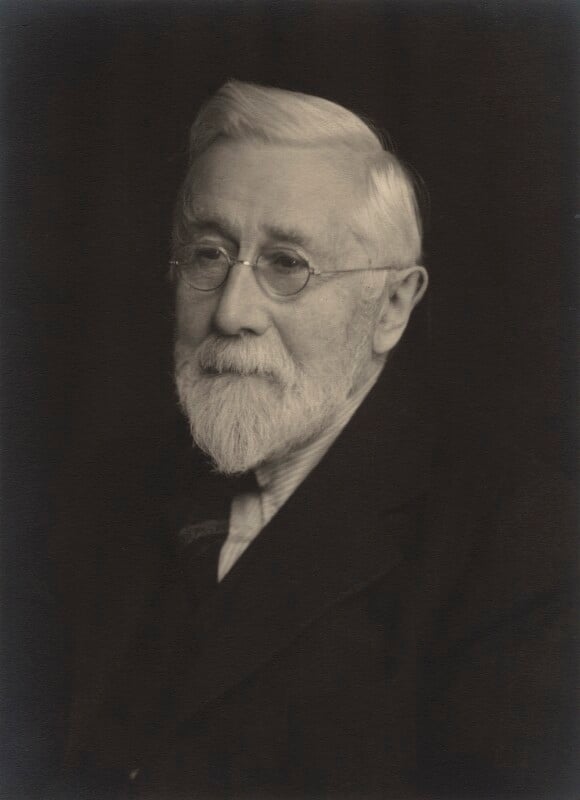
Meet Ninian Comper

Following the death of Father Richard Temple West, funds were raised to create three memorials in his honour. The most significant of these was the Chapel of St Sepulchre, designed in 1894–95 by the young architect Ninian Comper.

At the time, Comper was not yet widely known. His commission came through Father Bleaden, West’s successor at St Mary Magdalene’s, who had previously served as Vicar of St John’s in Aberdeen – Comper’s hometown. Bleaden knew Comper’s father and had taken an early interest in his work, giving the young architect one of his first major church commissions.

The Chapel of St Sepulchre became one of Comper’s earliest accomplishments, marking the beginning of a distinguished career. He would go on to design many notable church interiors, furnishings, and stained-glass windows across Britain, celebrated for blending Gothic and classical styles. In recognition of his work, he was knighted in 1950. Comper died in 1960 and is buried in Westminster Abbey.

Today

The chapel he built at the start of his career has been restored, and it is part of a guided tour of the undercroft.

The Sculptor: Thomas Earp

Thomas Earp (1828–1893), often referred to as “Street’s hands,” was the trusted sculptor of architect George Edmund Street. For St Mary Magdalene’s, Earp’s most dramatic work inside the church is the richly detailed stone screen – the reredos – behind the altar. At its centre is Jesus on the Cross, flanked by Mary Magdalene, the Virgin Mary, St John, Mary of Clopas, and Salome. Below, the twelve apostles stand in individual niches, each one uniquely carved.

Earp also created ten stone figures positioned between the nave arches depicting saints, prophets, and King David. On the exterior of the building he carved the striking sculpture above the south transept door, showing Mary Magdalene meeting the risen Christ.

Over time, pollution and weather took their toll, halos and hands were lost, but the piece has since been lovingly restored. Today, this doorway serves as a ceremonial entrance for special occasions, including visits from the Bishop of London.

Earp was one of the most respected sculptors of his day, earning acclaim for his marble and alabaster works at the International Exhibition of 1862. His best-known public work remains the 1863 reconstruction of the Eleanor Cross at Charing Cross – a landmark still standing in central London today.

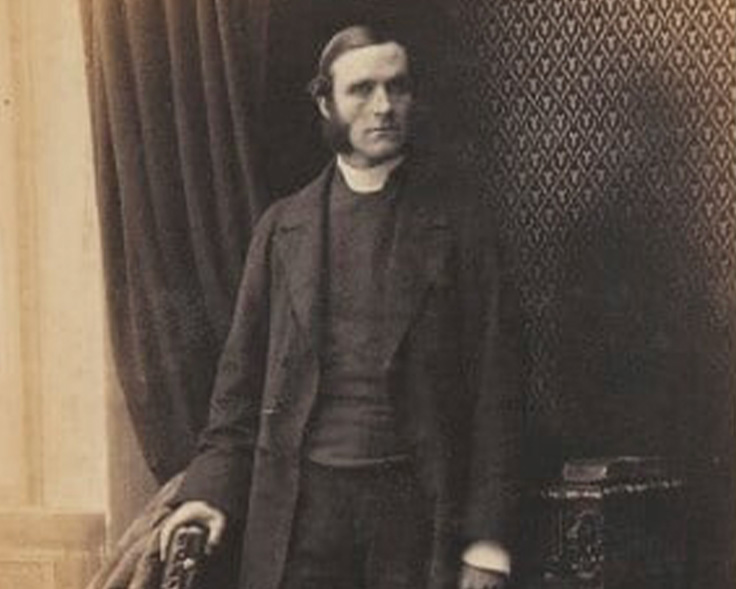
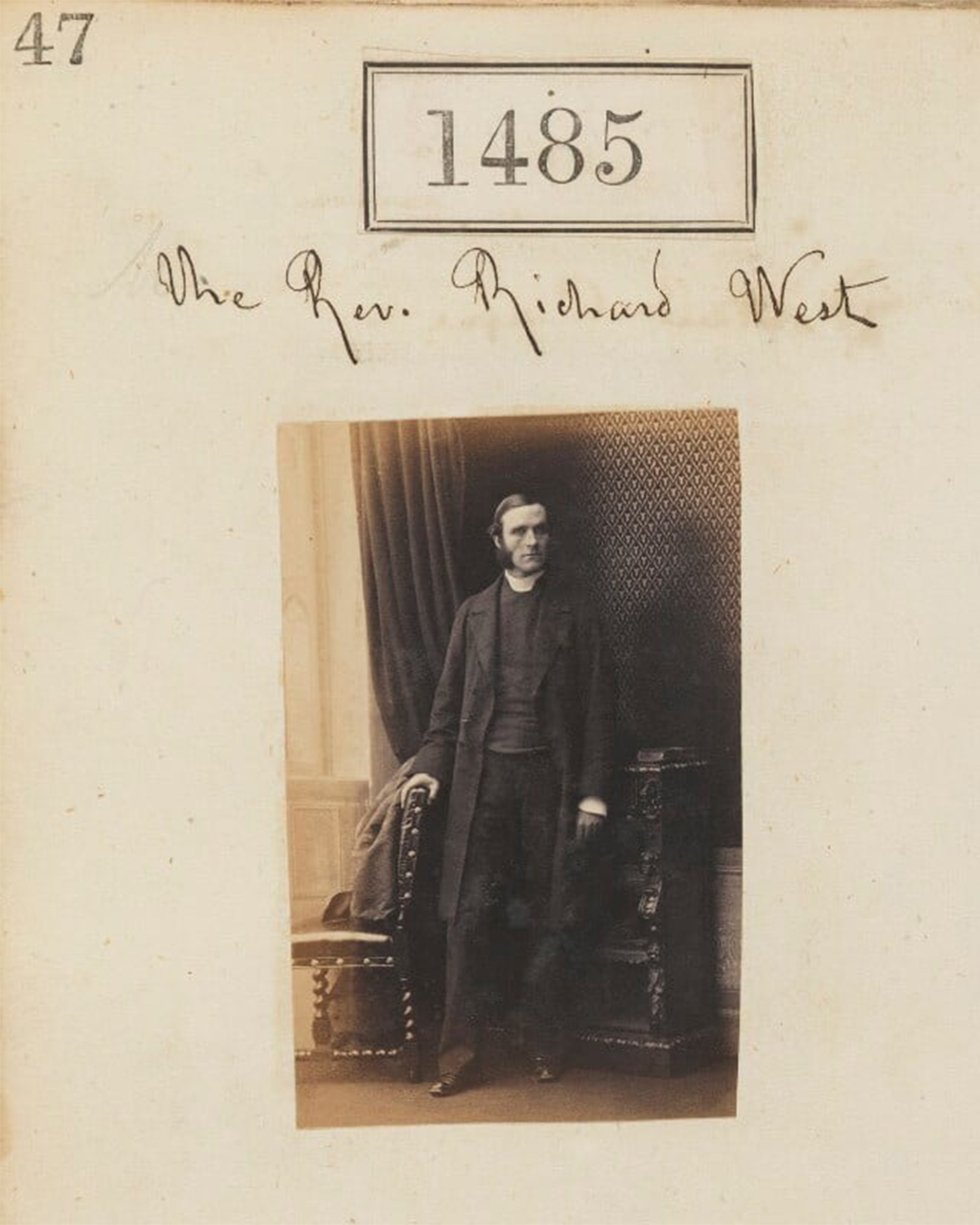
Father Richard Temple West

The first Vicar of St Mary Magdalene’s was Father Richard Temple West, formerly a curate at All Saints, Margaret Street near Oxford Circus. Coming from a wealthy and aristocratic background, West had strong social and political connections, which made him an exceptional fundraiser.

He became friends with the architect George Edmund Street, a fellow worshipper at All Saints, and together they shared a vision – to build a beautiful new church for the people of North Paddington. Thanks to West’s influence and determination, that vision became reality.

The first service was held on 22 July 1873, St Mary Magdalene’s Day – the feast of the saint the church is named for. It was another five years before the building was officially consecrated and fully opened, on 21 October 1878. West was here for both.

Once in place, West introduced an Anglo-Catholic style of worship – rich in ritual, colour, and music. He believed that such beauty and solemnity could communicate an emotional Christianity to the people of this parish in a powerful and accessible way. Father West remained devoted to his parish, serving faithfully until his death in 1893.

After his death, funds were raised for three memorials to him. The largest is the Chapel of the Holy Sepulchre, in the undercroft beneath the church – and in one of its windows, in the furthest from the altar, West himself kneels in prayer.

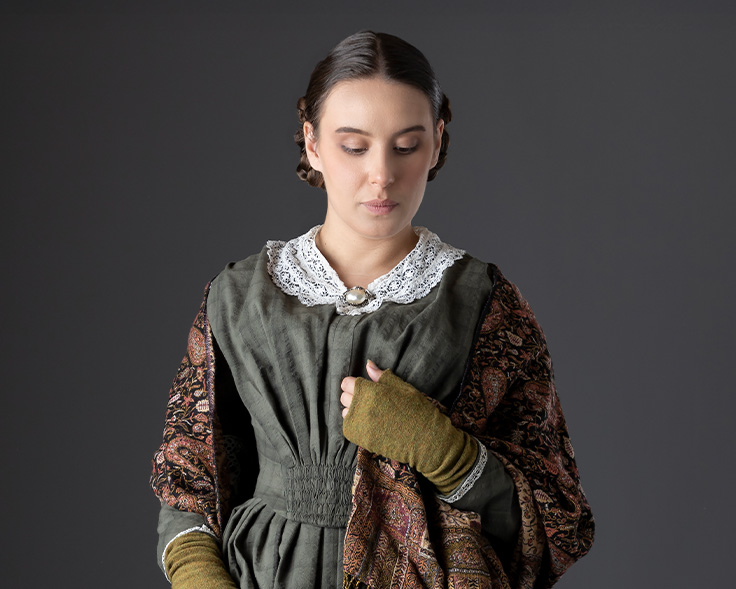
Victorian parishioner, Sarah Smith

We looked at the 1891 census for Clarendon Street, which once stood just north of St Mary Magdalene’s, to get a sense of the local people who used the church, including Sarah Smith, who lived on the street.

The census records her name, her age, her household and her trade, alongside those of her neighbours – forming a narrative inspired by this record, and by what is known about the street she lived on.

Today

Clarendon Street and Clarendon Crescent are both gone, cleared from the late 1950s, and the Warwick Estate stands where they were. People whose families lived on those streets are still here – one of them, Denise Laxton, traced her own connection back five generations to 1880 while working on this project.

Faces of the Stained Glass Windows

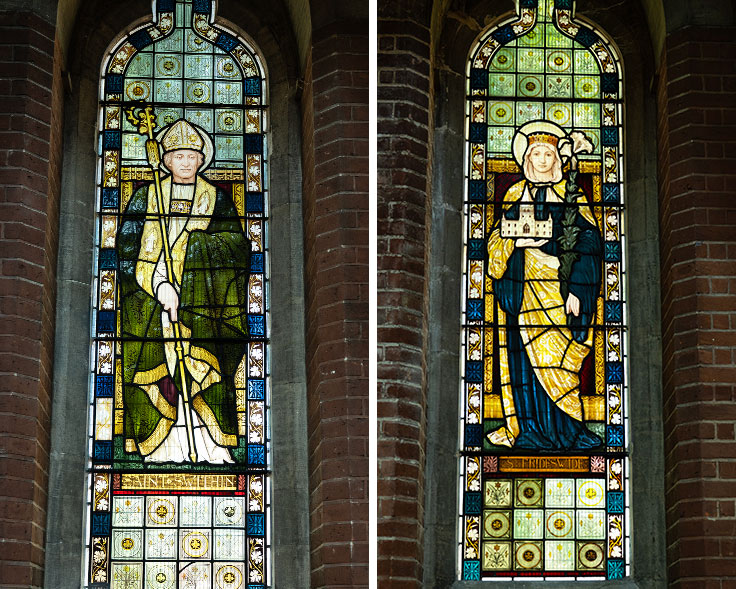
Henry Holiday’s Saints, Painted with the Faces of Victorian London.

Henry Holiday’s stained-glass windows are full of borrowed faces. Donors could choose which saint they wanted to sponsor, and several of those saints were given the features of Holiday’s own contemporaries. St Richard, for example, has the face of Richard William Church, Dean of St Paul’s from 1871 to 1890. Church was painted from life and appears here as a thirteenth-century bishop.

Two of these saints have lent their crowns to an augmented-reality filter: St Swithin, the ninth-century Bishop of Winchester, and St Frideswide, an Anglo-Saxon princess who became the patron saint of Oxford. The idea is therefore less of a novelty than it might seem. Holiday and his contemporaries were already putting familiar Victorian faces into the medieval world of the windows. The filter simply gives you the chance to do the same.

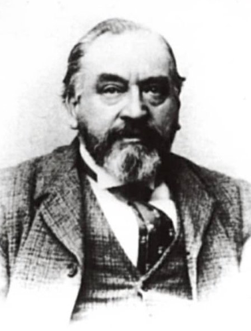
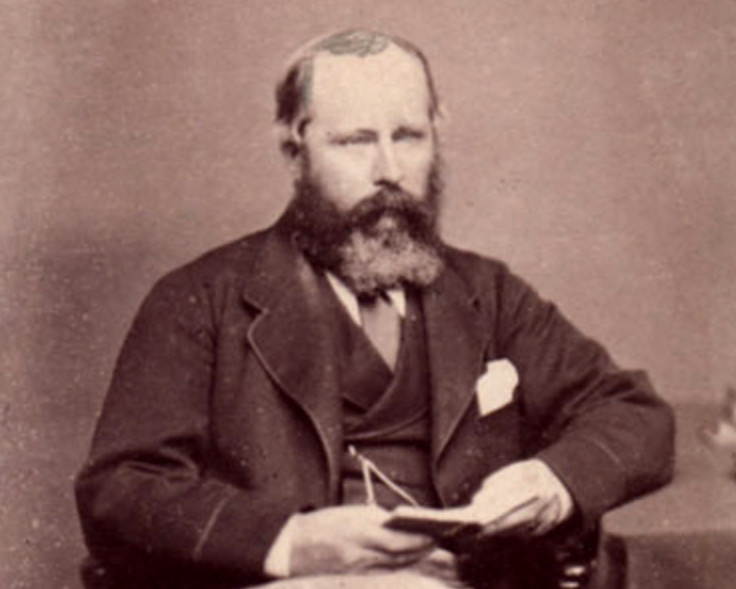
Photo architect of George Edmund Street

Meet the Architect: George Edmund Street

A Gothic Revival Architect at the Height of His Powers

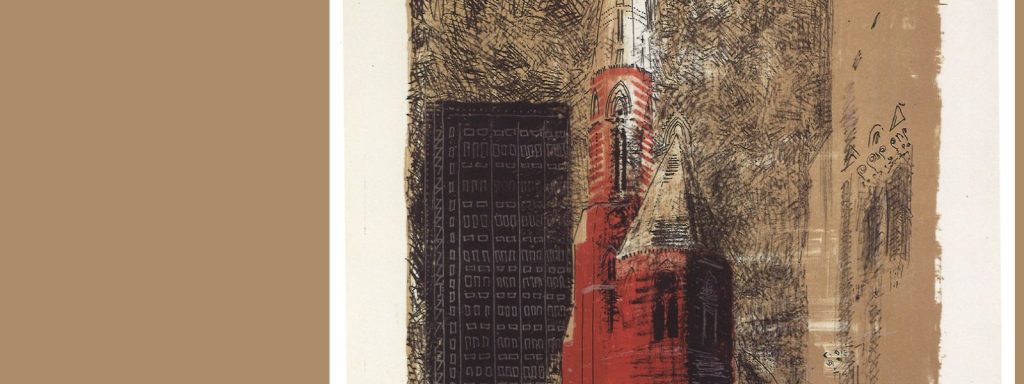
George Edmund Street (1824–1881), born in Woodford, Essex, was one of the leading architects and scholars of the Victorian Gothic Revival. Street looked to medieval architecture for inspiration, particularly the Gothic of the 13th and 14th centuries: pointed arches, steeply pitched roofs, clustered columns, rich stone carving, stained glass and an emphasis on vertical height and light. He combined these historic forms with modern Victorian materials and methods, creating buildings that were both scholarly in their detail and bold in their effect. He designed St Mary Magdalene’s at the height of his powers, while his most famous work, the Royal Courts of Justice on the Strand, was under construction.

Designing for the Site

The site was a narrow, difficult strip hemmed in by terraces, and Street responded by building upwards: an exceptionally tall church, drawing light from its clerestory high above the street. When the parish was founded in 1865, Street and the curate Richard Temple West were determined that its church should be a building of genuine beauty and ambition, rather than a cheaper or plainer version dictated by the neighbourhood. Street brought together some of the finest craftsmen of his day, including Thomas Earp, Henry Holiday and the Venetian Salviati workshop, whose stonework, stained glass and mosaics made the church a showcase of High Victorian Gothic design. His achievement was widely recognised and he became an Associate of the Royal Academy in 1866, received the Royal Institute of British Architects (RIBA) Royal Gold Medal in 1874 and was appointed Professor of Architecture at the Royal Academy in 1880. He died in 1881, three years after the church was consecrated, and is commemorated by a statue in the Great Hall of the Royal Courts of Justice.

Today

You can still read what Street saw. Brick and Marble in the Middle Ages, published in 1855, is his own travelogue of the architecture he went looking for in Italy – pointed arches, sculptural detail, metalwork and furniture, copiously illustrated, recorded building by building. It is the closest thing there is to seeing what he was thinking about before he designed this.