The War Memorial at St Mary Magdalene’s

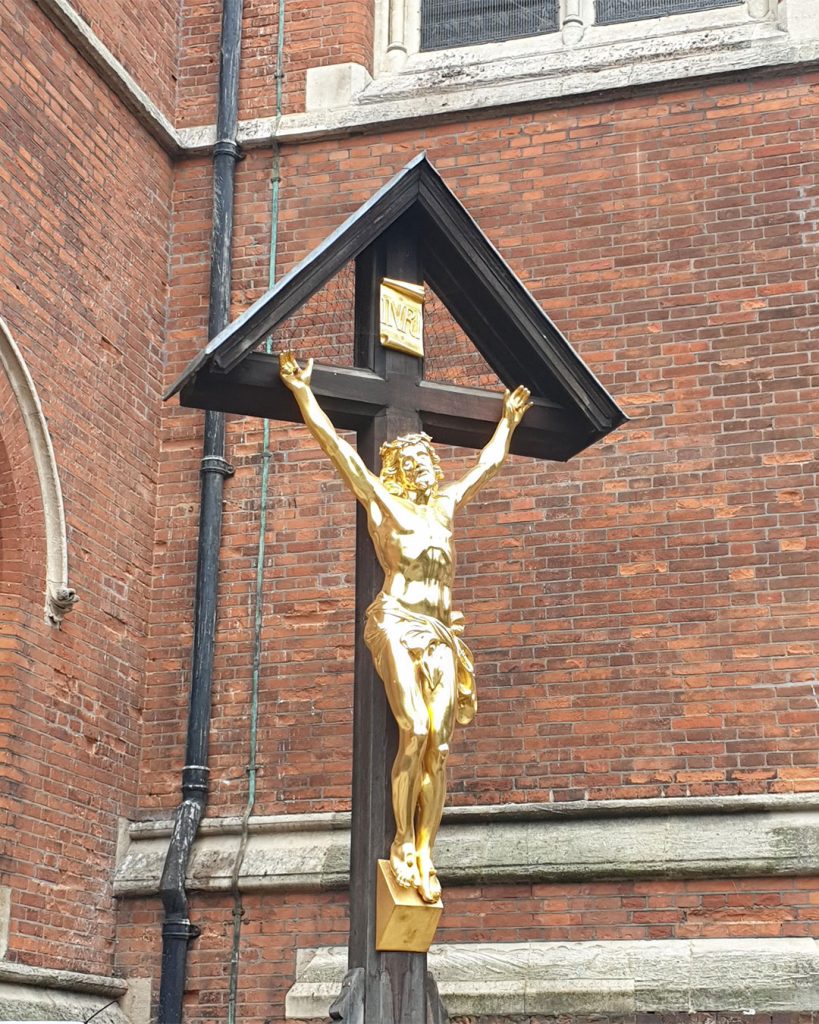
The cast iron crucifix outside St Mary Magdalene’s is a rare sight in England, a striking First World War memorial inspired by open-air crucifixion scenes more common in Western Europe. Restored in [year], it was designed by Martin Travers (1886–1948), one of the leading church artists of his time, despite being personally agnostic.

Travers also created the Lady Altar in 1923, in memory of Father Bleaden, the church’s second vicar. An earlier Gothic Revival altar by Ninian Comper had been installed beneath the south aisle, but by the 1920s, tastes had shifted. Travers, once Comper’s assistant, replaced it with a rich Neo-Baroque design. To enhance the view of the High Altar, Travers re-designed the east end of the church. He raised the chancel with a new marble floor and added the elegant marble balustrade that still lines the sanctuary today.

Trained at the Royal College of Art under architect Arthur Pite, Travers brought theatrical flair and architectural confidence to church design. Soon after his work at St Mary Magdalene’s, he returned to the RCA, this time as a teacher of stained glass, shaping a new generation of artists until his death in 1948.

It still stands exactly where Travers placed it, a century on, while the streets around it have been rebuilt more than once.

Gothic Revival and Anglo-Catholicism

An introduction to Gothic Revival

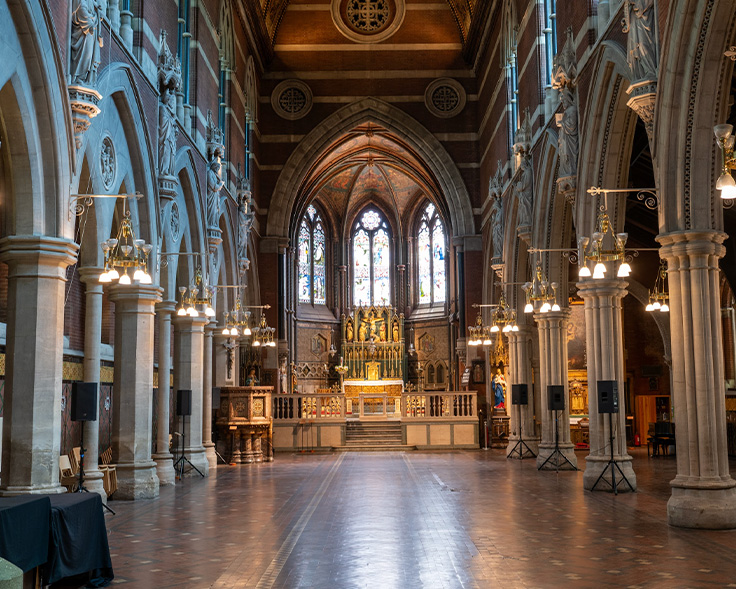
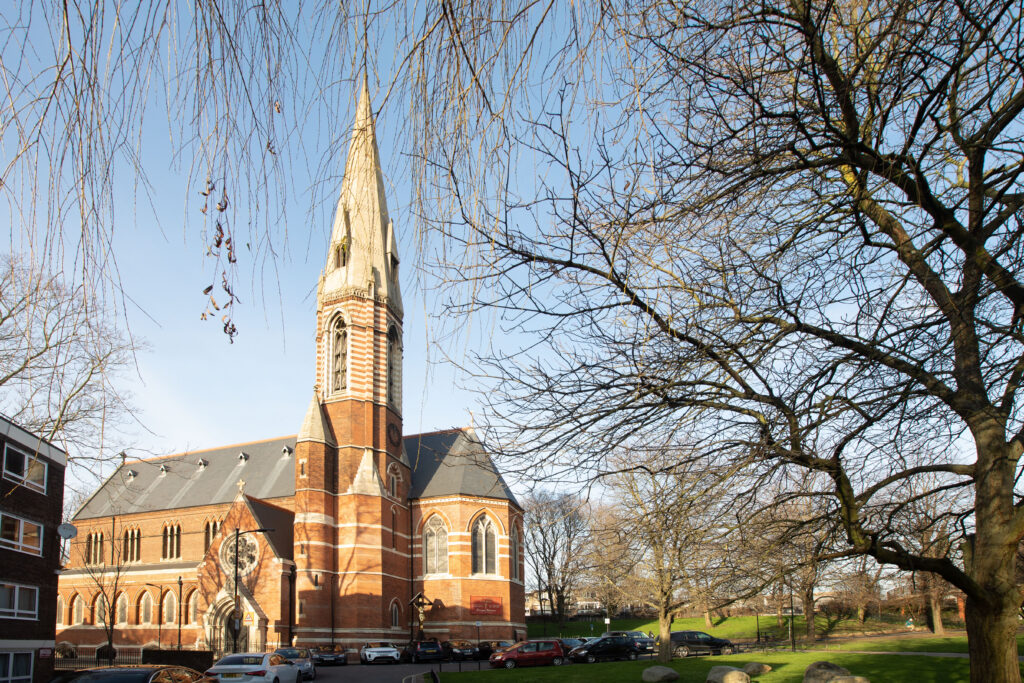
St Mary Magdalene’s is a stunning Grade I listed example of Gothic Revival architecture. It was designed by George Edmund Street at the height of his career, when Gothic Revival was at the centre of a movement to bring the architecture of the medieval period back into modern building.

The style is easy to recognise: pointed arches, soaring vertical lines, steep roofs, intricate stonework, decorative tracery and richly detailed interiors. Gothic Revival architects also drew inspiration from the natural world, using leaves, flowers and other organic forms in their decoration. Colour and symbolism were important too, reflecting the richness of medieval churches.

For its nineteenth-century supporters, Gothic was more than a style. They saw medieval architecture as an expression of honest religion, honest craftsmanship and honest construction. Rather than disguising how a building was made, Gothic Revival celebrated materials and workmanship, while creating spaces that encouraged the eye and mind to look upwards.

From the mid-nineteenth century, Gothic Revival became particularly associated with the Church of England. By around 1850, it had become the dominant style for new Anglican churches, and architects such as Street helped establish it as a powerful expression of Victorian religious architecture.


Anglo-Catholicism

St Mary Magdalene’s is an Anglo-Catholic church. This means it belongs to a tradition within the Church of England that places a strong emphasis on its Catholic heritage. Anglo-Catholic worship is often rich in colour, music and ceremony, making use of candles, incense, singing and beautiful vestments.

At the heart of this tradition are the sacraments especially Holy Communion, which is understood as a central way of encountering God. Anglo-Catholics also have a particular devotion to the Virgin Mary and the saints, and believe that worship should involve all the senses as well as the mind: what you see, hear and smell can all help create a sense of the sacred.

In the nineteenth century, this way of worshipping was highly controversial. Many people believed that Anglo-Catholics were bringing Roman Catholic practices back into the Church of England, and some churches experienced fierce opposition and even riots.

Anglo-Catholic churches were often built in some of the poorest and most overcrowded parts of Victorian cities. Their clergy believed that these communities deserved beautiful churches and rich, meaningful worship. But their work did not stop at the church door. They sought to care for the whole person, often running schools, clubs, social projects and other activities to improve life in their neighbourhoods.

That idea of serving the whole person continues at St Mary Magdalene’s today. The building was created to be part of everyday community life not simply a place people visited for an hour on a Sunday. Today, alongside being a working church, it remains a place for gathering, learning, eating and meeting others.
 

Preserving a Special Chapel

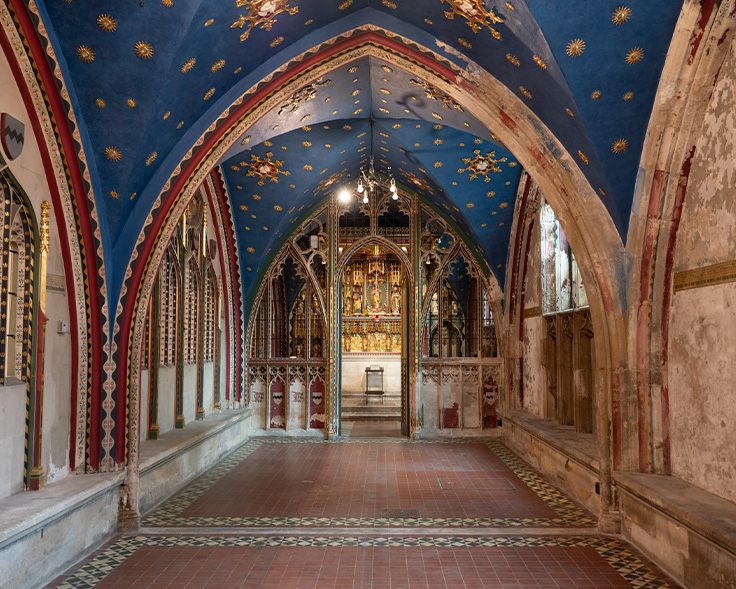
In the undercroft of St Mary Magdalene’s is the Holy Sepulchre Chapel: “a magical place, too hard of access” (Simon Jenkins, England’s Thousand Best Churches), remarkable for its “elaborate and concentrated richness [unlike any other] in the history of the Gothic Revival in England” (A. Symondson).

When the founder and first vicar Father West died in 1893 the Chapel of the Holy Sepulchre was created as a memorial to him. Nestled into the south aisle of the undercroft, it is an early work by the architect Ninian Comper, who created what is a complete work of art in itself within the larger masterwork of Street’s church.

The enormous amounts of carved stone, stained glass, gilding and ornamental paintwork take us back in time to a 15th century chantry chapel; a place where priests would sing masses for the soul of a dead person, who had usually paid for the chapel. Once completed, masses were said here for the soul of Father West, who had done so much to raise the funds to build St Mary Magdalene’s.

[MEDIA – IMAGE PAIR: the Last Judgement window, and a detail of Father West kneeling]

Can you find the window depicting the Last Judgement, based on the painting by famous 15th century Flemish painter Hans Memling? In the window furthest from the altar is Father West himself, kneeling in prayer.

The chapel was also where the Blessed Sacrament was reserved – kept in a secure container for the Communion of the sick, and as a focus for prayer. Both of these practices were quite different to how things were being done in mainstream Victorian Anglican churches. Those who founded the church and built the chapel believed strongly that the effects of the Reformation on the Church of England had been largely bad. So they decided to worship as if the Reformation had never happened and they were returned to the late 15th century. Sometimes Anglo-Catholic churches were attacked by Protestant rioters, and so at St Mary Magdalene’s the Sacrament was reserved in a specially designed safe, concealed by the decorated reredos behind the altar.

What the rioters never touched, damp nearly did. The chapel spent years on Historic England’s Buildings at Risk register, its decoration deteriorating, partitioned off from the rest of the undercroft for its own protection while drainage was improved around it and the air inside was stabilised. That groundwork made the restoration possible, and the restoration is now complete.

[MEDIA – BEFORE/AFTER SLIDER: chapel decoration, before and after conservation]

Use the slider to compare the decoration before and after conservation.

The partition is down and the colours are back. Comper’s chapel can be seen again from the undercroft, through the pierced screen he designed it to be seen through.

Today

The chapel is part of a guided tour of the undercroft, where you can learn about the heritage of this hidden gem and its restoration [LINK].

The Undercroft

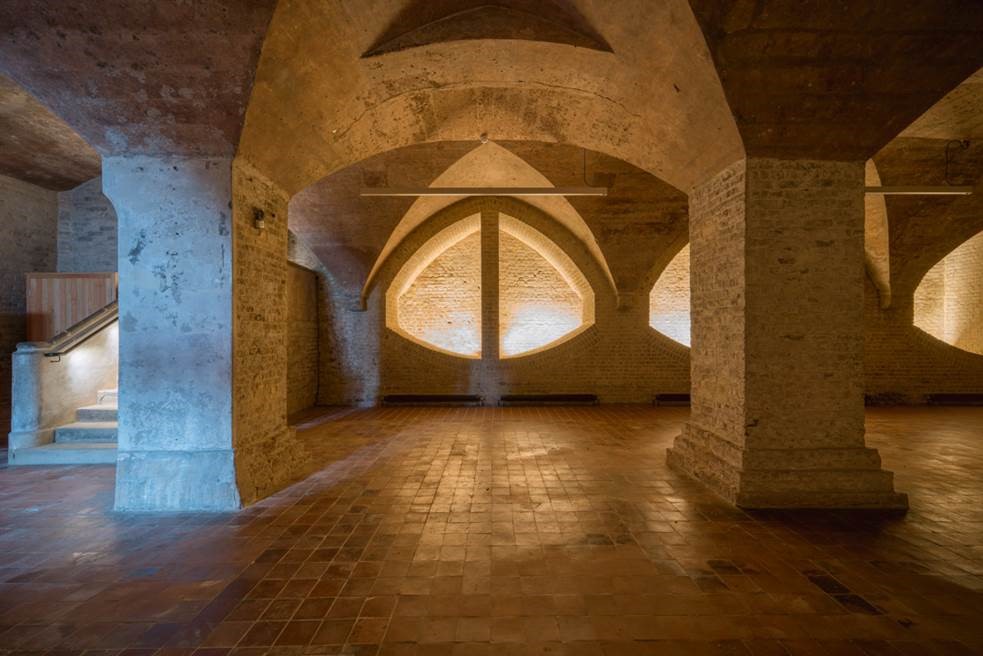
Before the chapel you see today was built, this area of the south aisle served as a mortuary chapel, where the dead were laid out before being buried elsewhere. No one has ever been buried here, that’s why we call it an undercroft rather than a crypt. St Mary Magdalene’s Church was built after the 1852 Act of Parliament that banned burials inside churches.

The space has kept changing ever since. Christine Lilley, born on Clarendon Crescent in 1951, remembers attending Sunday School down here.

Today

The undercroft has changed its purpose more times than any other part of this building, and it is still doing so – it is in regular use today for some of our adult and young people classes, private parties and conferences, exhibitions and tours.


Use the slider in the images to compare before and after the conservation work.

Mosaics from Italy

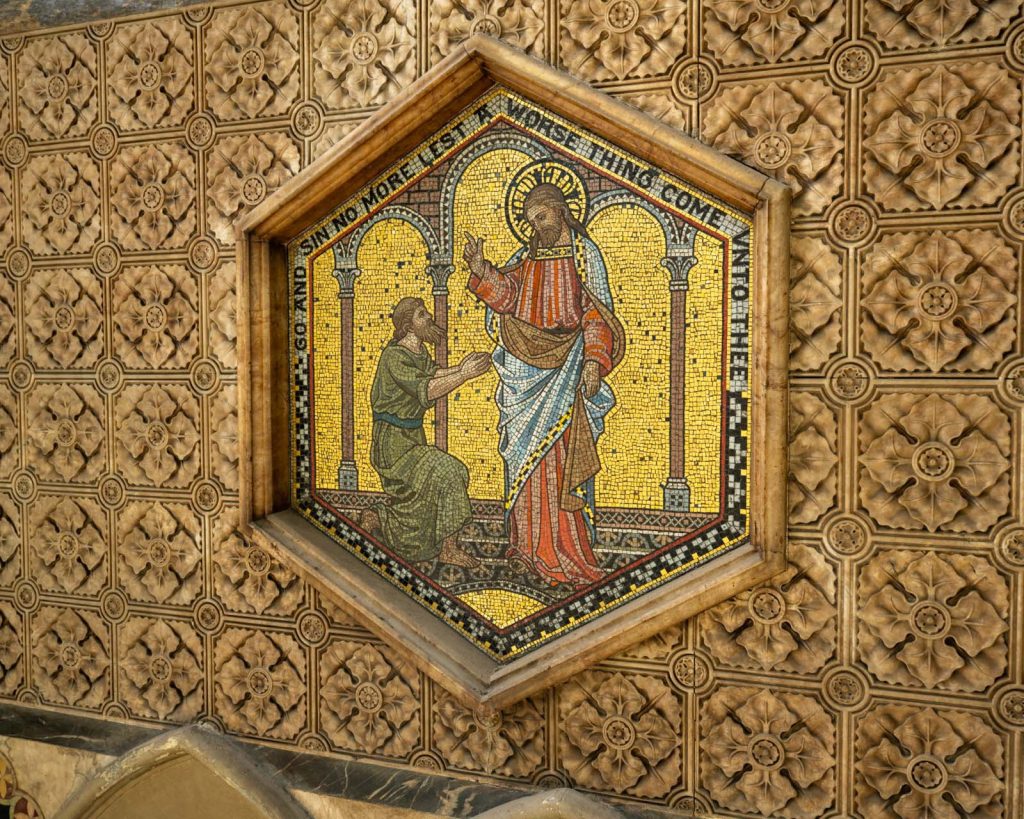
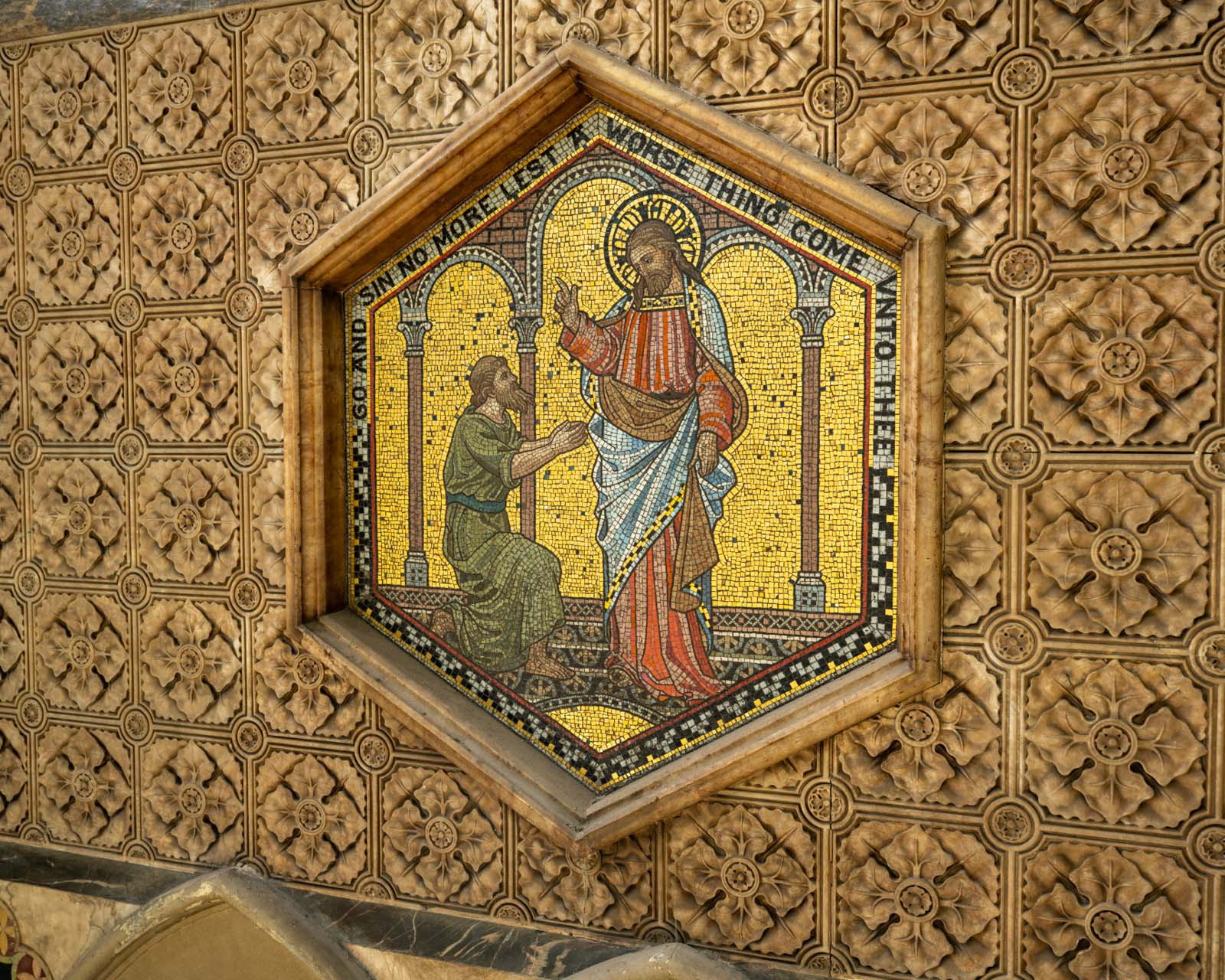
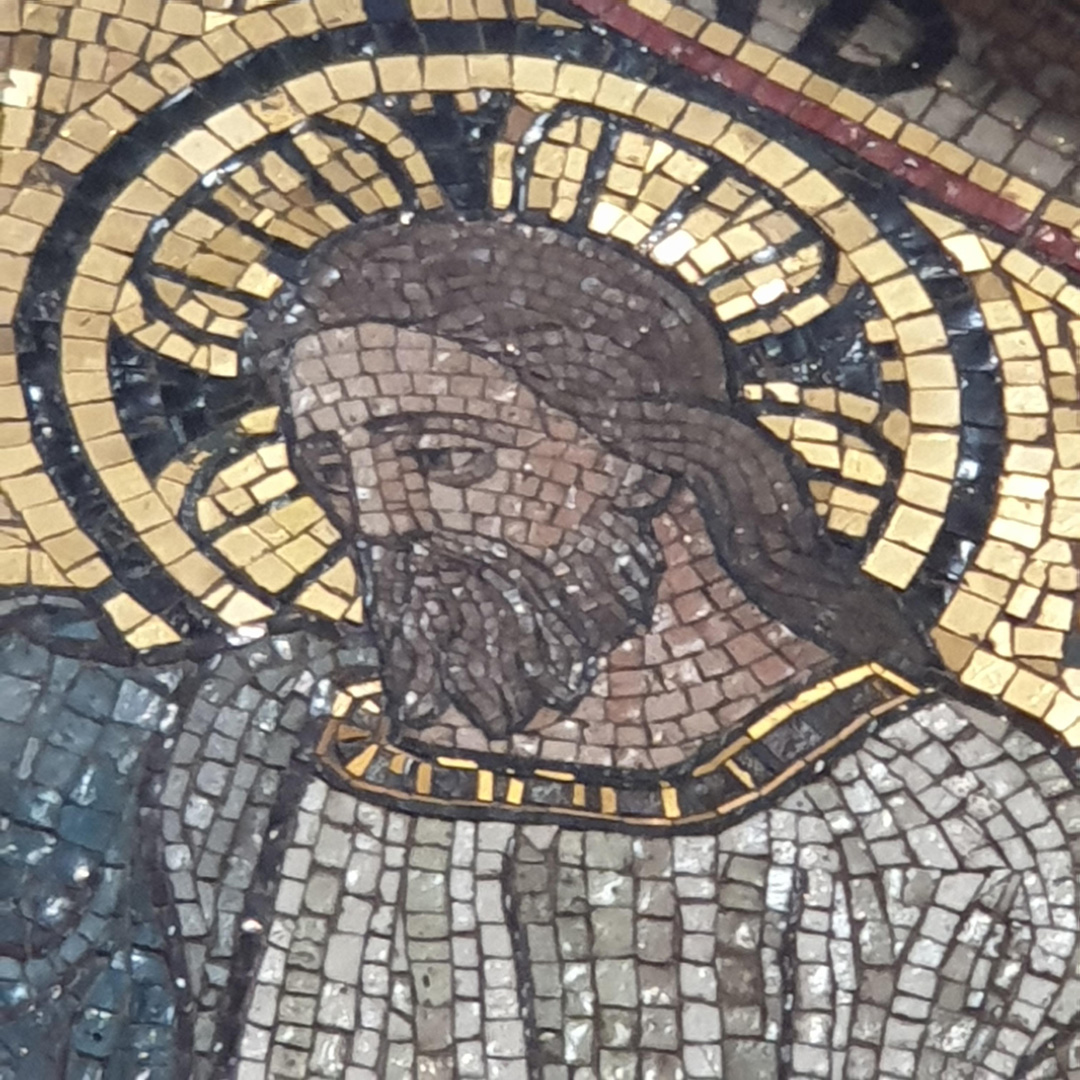
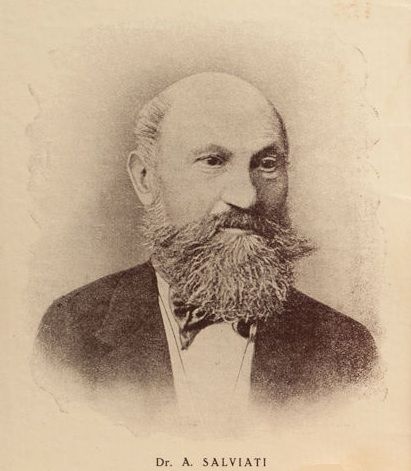
The six hexagonal mosaics in the chancel were created by the Venice and Murano Glass and Mosaic Company, founded by an unlikely figure – Antonio Salviati, a lawyer turned glassmaking revivalist. These vibrant panels, rich in colour and detail, depict scenes of Jesus’s compassion and love for humanity.

Murano, the Venetian island famous for its dazzling glass, had been Europe’s centre of luxury glassmaking since the Middle Ages. So vital was the industry that, in 1291, Venetian authorities confined glassmakers to Murano, threatening exile or even death if they shared their secrets abroad.

Salviati was passionate about reviving this fading art. Backed by British antiquarians and art lovers, he brought historic Venetian techniques back into fashion during the Victorian era, especially for grand public and religious buildings. In addition to his work at St Mary Magdalene’s with Alfred Bell – whose painted ceiling is directly overhead – Salviati’s mosaics appear in the central lobby of the Houses of Parliament, the altar screen at Westminster Abbey, and even a reproduction of a fifth-century mosaic of Christ and sheep, now housed in the V&A. Remarkably, the company Salviati founded still operates in Venice today, preserving a centuries-old tradition that helped bring sacred spaces like this one to life.

The Chancel Ceiling

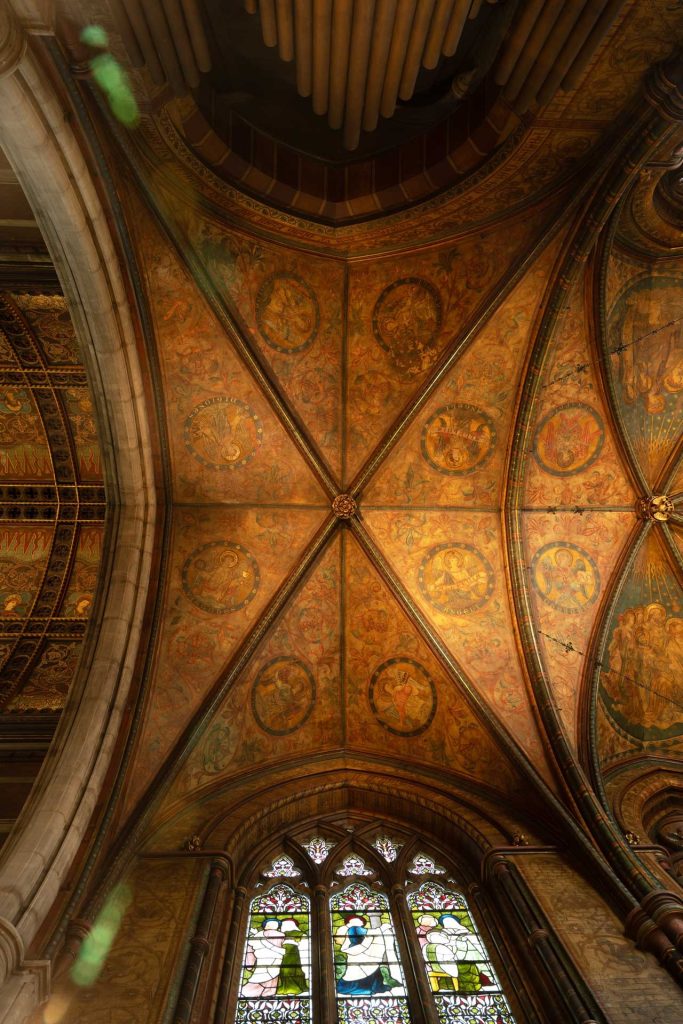
Although the chancel ceiling was long credited to Daniel Bell, conservation work in 2018 revealed it was likely the work of his older brother, Alfred Bell (1832–1895). Unlike the wooden nave ceiling, Alfred painted directly onto the plastered brick vault of the chancel and even added sand to his paint, giving the surface a subtle, glittering effect in the light. The ceiling shows Christ in glory, surrounded by saints and angels. It’s a vivid, otherworldly scene that enhances the sacred space below.

Alfred Bell was an accomplished decorative artist, best known for his long partnership with Richard Clayton. Together, they worked on major projects, including interior decoration at the Houses of Parliament, under the Gothic Revival master Augustus Pugin. Alongside Venetian mosaicist Antonio Salviati, they also designed mosaics for the Albert Memorial – and Salviati’s work can be found in this chancel too.

Bell and Clayton once shared a studio with stained glass firm Heaton, Butler and Bayne, who later produced the windows designed by Henry Holiday for this very church. By the 1870s, Bell had moved his growing operation to Regent Street and took on high-profile commissions. In 1883, their reputation earned them a royal warrant from Queen Victoria after their work at Windsor Castle.

The ceiling can be seen from the nave, and our guided heritage tours take you closer.

The Windows of St Mary Magdalene’s Church

The stunning stained-glass windows in the nave and chancel were designed by Henry Holiday (1839–1927), a painter, sculptor, illustrator, and one of the most imaginative figures of the Victorian art world. Closely associated with the Pre-Raphaelite Brotherhood, Holiday shared their passion for natural beauty, vibrant colour, and medieval detail over the idealised styles of the Renaissance.

Trained at the Royal Academy, Holiday rejected its classical rules in favour of lifelike figures and richly textured scenes. His windows were made by Heaton, Butler & Bayne, a top firm of the Gothic Revival era, and showcase vibrant coloured glass hand-painted with fine detail, then leaded into place. Holiday had worked with the firm before, including on a window for Westminster Abbey.

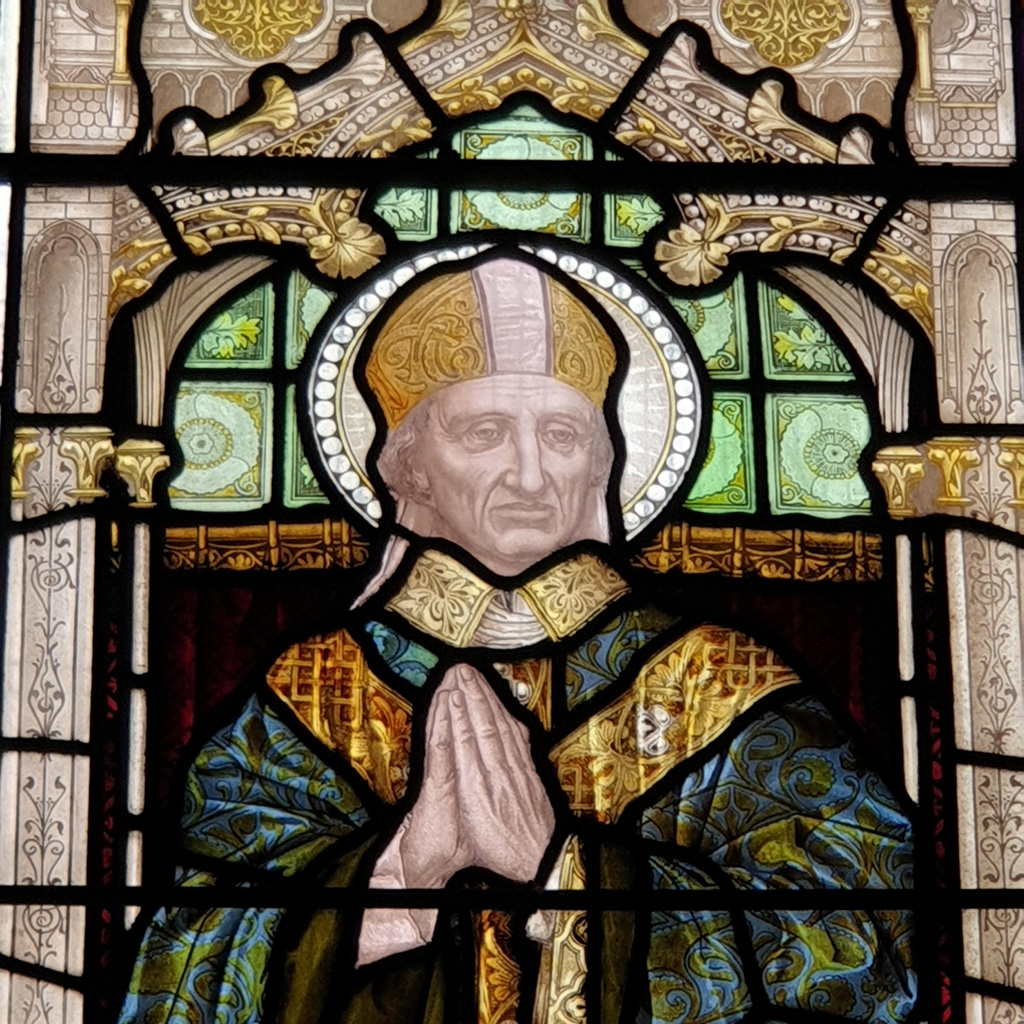
At St Mary Magdalene’s, donors could choose the saint they wanted to sponsor. Several of them look like Holiday’s fellow Victorians. For example, St Richard is depicted with the face of Richard William Church, the Dean of St Paul’s at the time (1871–1890).

A Cross of Memory

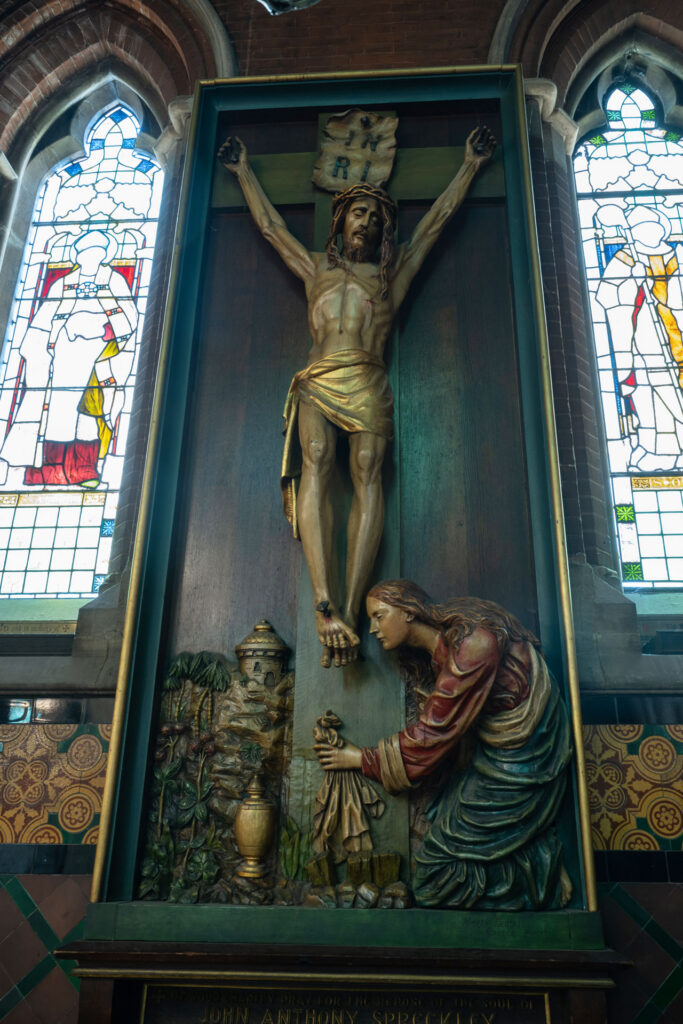
The painted wooden sculpture of Jesus on the Cross with Mary Magdalene was carved by Harry Hems (1842–1916), a celebrated Gothic Revival sculptor.

This moving crucifixion scene was commissioned in memory of Lieutenant-Colonel John Anthony Spreckley, a gold miner and soldier who fought in Southern Africa during Britain’s colonial wars. He was a friend of Lord Baden-Powell, founder of the Scouts, who praised the Spreckleys as “heroes of the rebellion” against the Ndebele people – their armed resistance to British occupation of their land in the 1890s. The sculpture’s inscription invites prayers for Spreckley’s soul, and includes a memorial to his wife as well. Spreckley died in 1900 during the Second Boer War.

Today, the sculpture stands as both a devotional artwork and a reminder of the legacies of Empire woven into the fabric of Victorian churches.

A Seat for Everyone

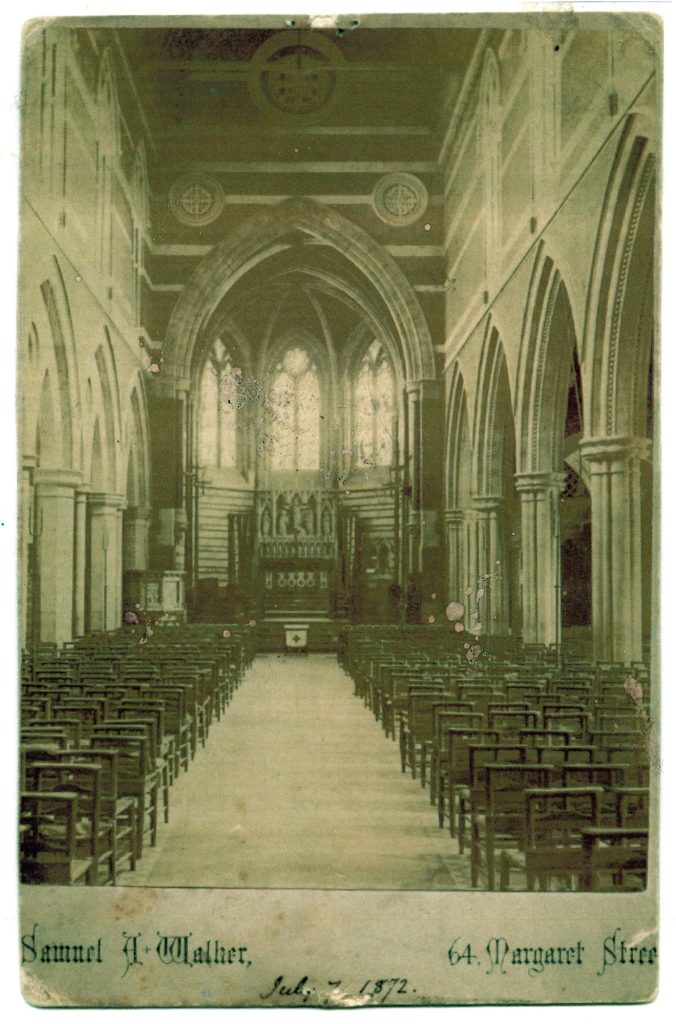
St Mary Magdalene’s Church was never fitted with fixed pews. Instead, it was furnished with moveable chairs, a deliberate decision reflecting the church’s commitment to social equality. In many Victorian churches, pews were rented by wealthier parishioners, leaving everyone else standing or seated at the back. But here, all seats were equal and flexible, removing social divisions and allowing the space to adapt for worship or community gatherings.

This choice echoes the church’s Anglo-Catholic roots, which combined rich liturgy with a deep concern for the people of the parish it served.

That decision still shapes how the building works. Because nothing is fixed to the floor, the nave clears – and the same room can hold a concert, an exhibition, a wedding or a community gathering, then reset for the next one.

Faces of the Stained Glass Windows

Henry Holiday’s Saints, Painted with the Faces of Victorian London.

Henry Holiday’s stained-glass windows are full of borrowed faces. Donors could choose which saint they wanted to sponsor, and several of those saints were given the features of Holiday’s own contemporaries. St Richard, for example, has the face of Richard William Church, Dean of St Paul’s from 1871 to 1890. Church was painted from life and appears here as a thirteenth-century bishop.

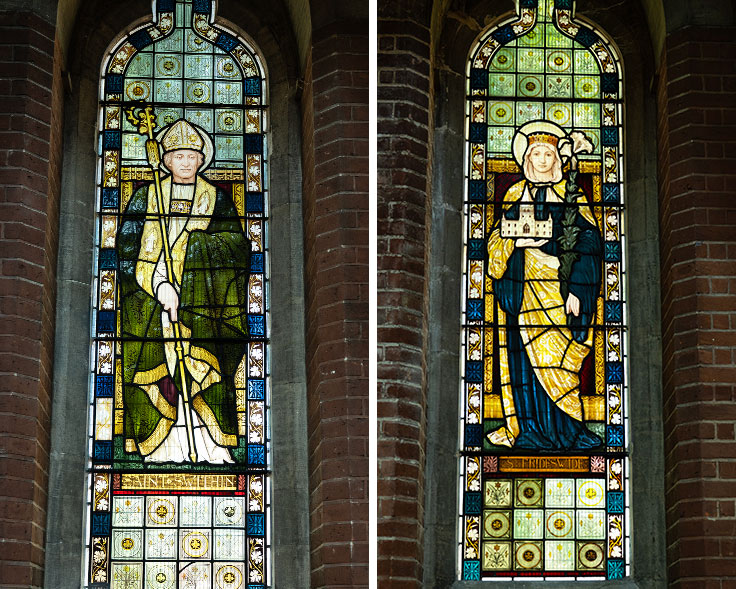
Two of these saints have lent their crowns to an augmented-reality filter: St Swithin, the ninth-century Bishop of Winchester, and St Frideswide, an Anglo-Saxon princess who became the patron saint of Oxford. The idea is therefore less of a novelty than it might seem. Holiday and his contemporaries were already putting familiar Victorian faces into the medieval world of the windows. The filter simply gives you the chance to do the same.