Eco Minds: An Introduction to Architecture for Young People

An eight-week programme empowering the next generation to imagine and shape a more sustainable future.


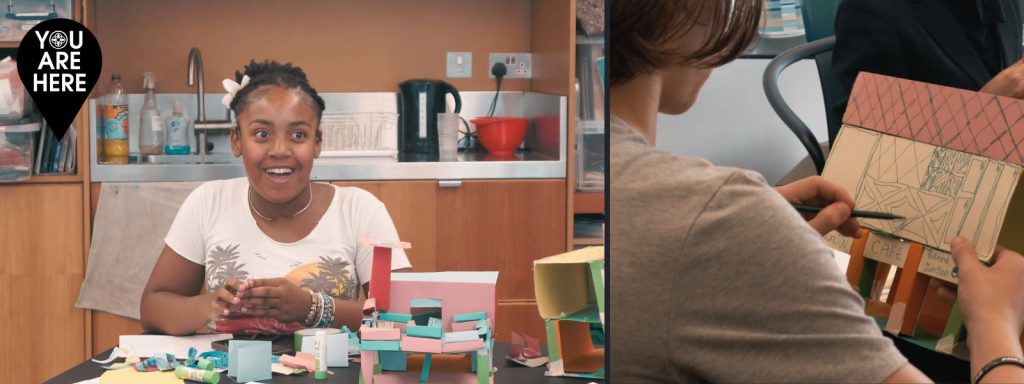
From April to June 2026, EcoMinds inspired young people aged 12–16 to explore architecture, sustainability, and climate action through weekly creative and practical workshops. Led by professional architects from Architecture for Kids CIC alongside youth facilitators, participants took on a real-world retrofit design challenge, reimagining St Mary Magdalene’s at Grand Junction as a greener, healthier space for the future. Through hands-on design activities, site visits, and collaborative workshops, they investigated sustainable solutions while developing practical design, problem-solving, and environmental skills.

EcoMinds was delivered in partnership by Architecture for Kids CIC, Pinzauer, and Grand Junction, with funding from the Westminster Climate Fund, and the National Lottery Heritage Fund.


To find out more about the wider You Are Here project and its activities, click here.


Check out the video below to see what our participants got up to on the programme!

[image_with_animation image_url=”17457″ image_size=”full” max_width=”100%” max_width_mobile=”default” animation_type=”entrance” animation=”Fade In” animation_easing=”default” animation_movement_type=”transform_y” hover_animation=”none” alignment=”” border_radius=”none” box_shadow=”none” image_loading=”default” migration_media_id=”17457″ migration_media_url=”https://grandjunction.org.uk/wp-content/uploads/2022/06/English_Made_Possible_logo_colour_JPEG.jpg”]

UPCOMING YOU ARE HERE EVENTS

[nectar_portfolio layout=”4″ category=”events-you-are-here,you-are-here-events” project_style=”1″ item_spacing=”default” load_in_animation=”none” projects_per_page=”-4″]

Echoes of Us: A Storytelling & Memory Making Journey

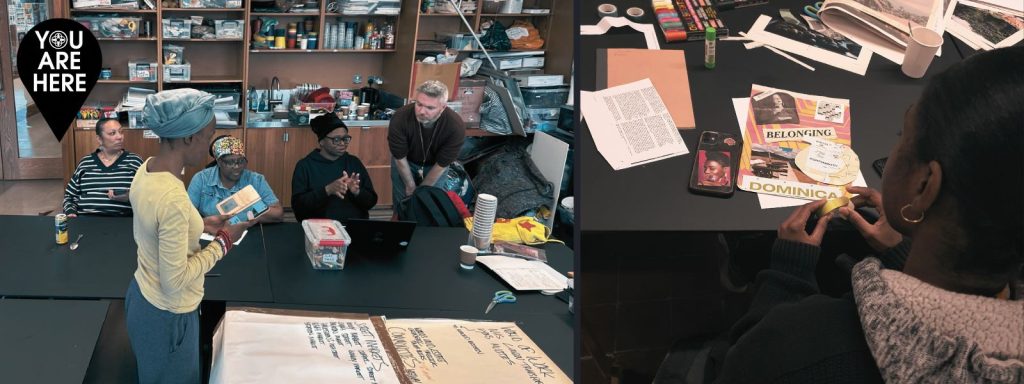
From February to April 2026, Echoes of Us brought Black-Caribbean communities in Paddington and West London together for 10 weeks of creative workshops celebrating heritage, identity and belonging.


Developed in collaboration with local participants, the project invited people to share personal and ancestral stories through conversation, visual art, sound, photography, and digital media. Together, they explored oral histories, memory-based art, family keepsakes, migration journeys, and portraits of belonging, creating a rich collection of work that reflected the diversity and strength of their lived experiences.

Throughout the programme, participants developed creative storytelling, sound recording, photography, zine-making, and digital content creation skills while working collaboratively to preserve and celebrate community heritage. The workshops encouraged participants to transform memories into artistic expression, combining traditional storytelling with contemporary creative practices to produce a collaborative heritage exhibition.

The artwork created during the project will be showcased to the public at To The Table – Echoes of Home: Music Food & Art, a special evening celebration of local Caribbean and African cultures on 8 October 2026. To register your free spot, click here.

To find out more about the wider You Are Here project and its activities, click here.


Echoes of Us is supported by the City of Westminster and the National Lottery Heritage Fund, as part of You Are Here, a three-year project at Grand Junction celebrating the diverse local heritage and community.

[image_with_animation image_url=”17457″ image_size=”full” max_width=”100%” max_width_mobile=”default” animation_type=”entrance” animation=”Fade In” animation_easing=”default” animation_movement_type=”transform_y” hover_animation=”none” alignment=”” border_radius=”none” box_shadow=”none” image_loading=”default” migration_media_id=”17457″ migration_media_url=”https://grandjunction.org.uk/wp-content/uploads/2022/06/English_Made_Possible_logo_colour_JPEG.jpg”]

Paddington Development Trust logo - A Grand Junction Partner

UPCOMING YOU ARE HERE EVENTS

[nectar_portfolio layout=”4″ category=”events-you-are-here,you-are-here-events” project_style=”1″ item_spacing=”default” load_in_animation=”none” projects_per_page=”-4″]

Sudan Series: Neighbourhood Nights

You Are Here Heritage Events: Sudan Series: Neighbourhood Nights

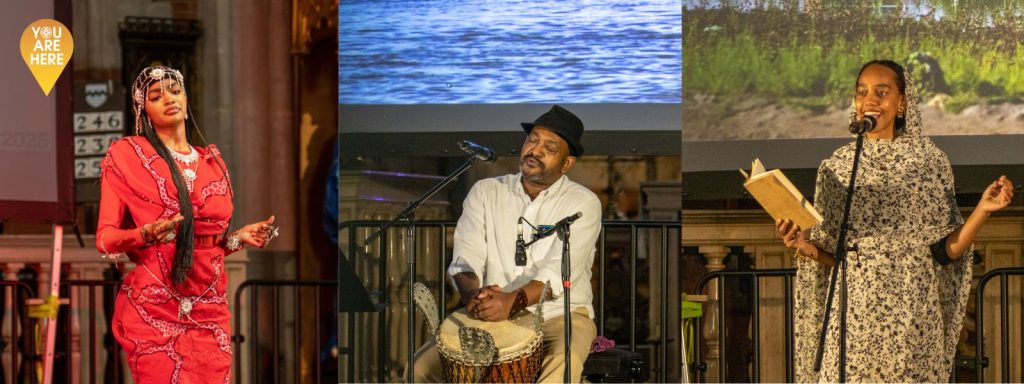
On 12 February 2026, we hosted our second evening in the Sudan Series as part of You Are Here project, funded by The National Lottery Heritage Fund. The evening was co-curated by Sudanese poet Eljae and multidisciplinary artist Ahmed Akasha, in collaboration with Shubbak Festival.

The evening brought together music, storytelling and community, with Ahmed Al-Lord leading a workshop exploring the history of Sudanese music, followed by a live performance of traditional folk music. Traditional folk tales from across Sudan were shared by Yassmin Abdel-Magied, Afia Abusham and Ola Elhassan, while our Undercroft was transformed into a games room where guests could discover and play traditional games from across Sudan.

Watch highlights from the event below (Film by Narvir Singh)

Keep an eye on our website for upcoming events at Grand Junction!

Sudan Series: Neighbourhood Nights was generously supported by National Lottery Heritage fund as part of the You Are Here project

Call for Artists: Digital Art Commission at Grand Junction

Are you an artist, designer, or creative with a passion for public-facing projects?

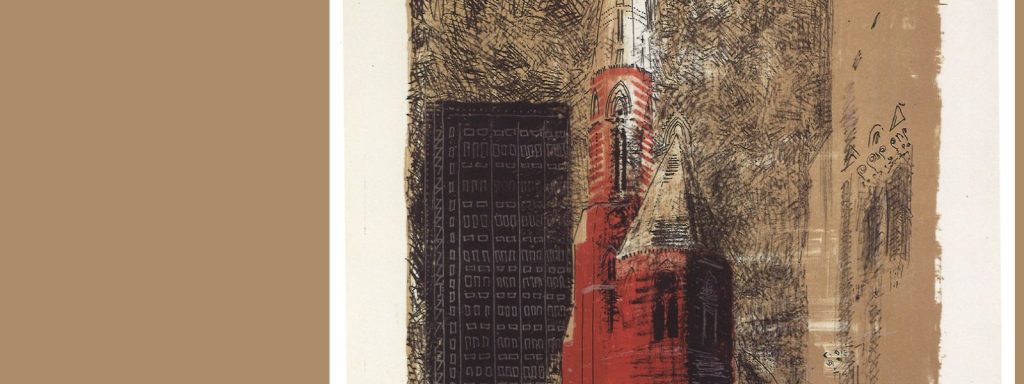
Grand Junction, a cultural venue and community hub run by Paddington Development Trust, invites artists, creatives, and collectives to propose a digital artwork for St Mary Magdalene Church, celebrating the rich history, community, and evolving story of our building and local communities. This commission forms part of You Are Here, a National Lottery Heritage Funded project exploring place, heritage, and belonging. We are looking for immersive, participatory work that brings people together, sparks dialogue, and creates a sense of belonging.

What we are looking for:

  • We are seeking a durable and sustainable digital artwork that can live in situ for at least 12 months, with the possibility of a longer lifespan.
  • Digital artwork could consist of (but is not limited to the following)- video, projection, animation, digital collage, interactive lighting, lens-based media, audio, or mixed media.
  • Art that is sensory, joyful, and inclusive, using colour, light, sound, movement, or interactivity to engage audiences.
  • Work that engages with site-specific storytelling, making visitors feel welcome, safe, and part of a shared experience.
  • Audience-driven and participatory experiences that engage with concepts of migration, belonging and place-making.
  • Proposals that are accessible across languages, ages, abilities, and devices, considering technical and physical constraints.
  • Ethical, human-made art (not AI-generated) developed with thoughtfulness, sensitivity, and respect for the site.

Practical considerations:

  • Artists should visit the site in advance to understand its atmosphere, architecture, and community context.
  • Consider both interior and exterior spaces, thinking about visibility, engagement, and the audience journey.
  • Artists are expected to develop proposals that respond sensitively to the church as a living place of worship, with the ambition and scale of the work carefully calibrated to this setting.
  • Outline how the work will be experienced digitally and physically, including interaction type, technical setup, and contingency planning.
  • Address accessibility, safety, and inclusivity, ensuring the artwork can be enjoyed by diverse audiences.
  • Artist must be willing to work collaboratively with communities and our volunteer curator panel, who have shaped the brief and will be involved in the selection process.

Fee & Budget:

  • A total budget of up to £20,000 (inclusive of VAT) is available for this commission. This budget is intended to cover artist fees, production, technical development, delivery, and VAT. As a guide, we anticipate allocating approximately £7,000 for the artist fee. The remaining budget will support production and delivery costs, which may include technical development, software or platform requirements, testing, project management, and final delivery. This breakdown is provided as an indicative guide rather than a fixed split. We recognise that digital projects vary significantly in their technical and creative demands, and we are open to discussing the balance between artist fees and production costs in response to the proposed approach, scope, and experience of the commissioned artist. We are committed to fair and transparent remuneration and welcome proposals that clearly articulate how the budget would be used to create the work to a high standard.

In your proposal, please include:

  • Concept and inspiration, referencing points within our ‘What we’re looking for’ (see above).
  • Intended visual style, materials, and digital software.
  • Audience experience: how they will interact, the journey, and the emotional impact.
  • Practical considerations: location, technical requirements, and maintenance.

Submission & Timeline:

  • Please submit a proposal (max 2 pages) responding to the brief.
  • A CV and short bio of lead artist(s).
  • A selection of images or links to documentation of relevant previous work.
  • A basic budget breakdown explaining how you would allocate the production budget (excluding artist fees).

Interested?

We welcome questions ahead of submission. Please direct any enquiries and submit proposals to Alan Kirwan, Heritage & Volunteer Manager at alan@grandjunction.org.uk

The deadline to submit proposals is 16 February 2026.

This opportunity is part of You Are Here, a National Lottery Heritage Funded project at Grand Junction, St Mary Magdalene’s.


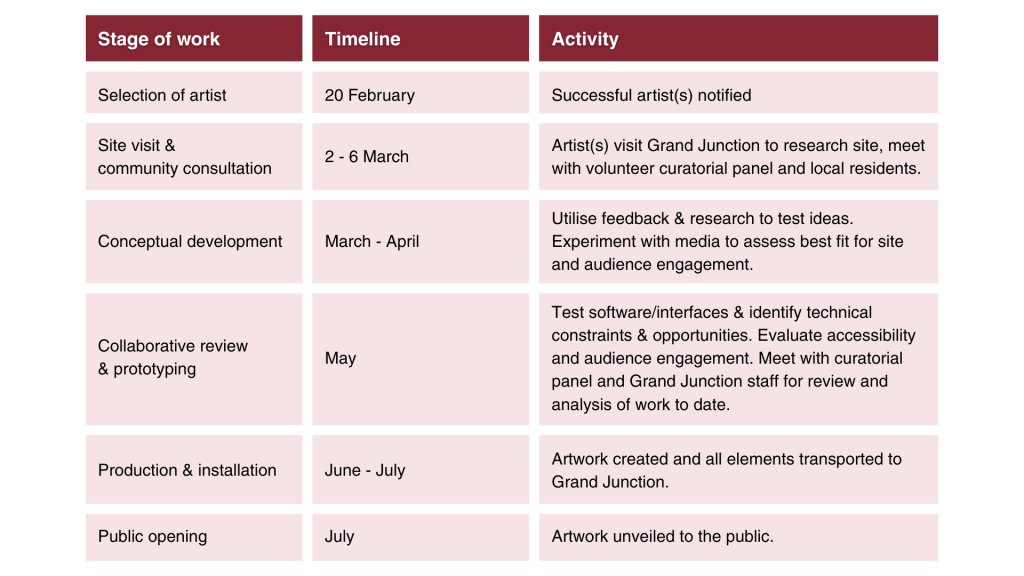
Timeline (Indicative)

Grand Junction Volunteer Curators Wanted

Volunteer Curators Wanted!

Join our curator panel and help shape new digital artwork at Grand Junction

Are you interested in local stories and creative ideas? We’re looking for Volunteer Curators to be part of an exciting new project to help commission an artist and create a digital artwork inspired by the history of our building and the local area. This is a chance to get involved in something creative and meaningful, helping shape how our shared history is told through digital art.

What the role will involve and who we are looking for:

As a Volunteer Curator, you’ll work with our Heritage & Volunteer Manager and other local volunteers to explore historical themes, share ideas, and help choose the artist and direction of the final artwork. Whether you’re into history, storytelling, digital media, or just love being involved in community projects, we’d love to hear from you. You don’t need any experience in the arts, just an interest in the local area and a willingness to get involved and try something new.

Why get involved?

This is a great opportunity to learn new skills, meet new people, and be part of a creative team. You’ll have the chance to shape something unique that celebrates our community and its stories. Along the way, you’ll build confidence, develop your creativity, and help bring local history to life in a fresh and modern way through an exciting art project.

How to get involved:

  • This opportunity is open to anyone aged 18 and over.
  • Volunteers will need to commit to attending panel meetings twice a month from November 2025 to June 2026.
  • You can take part in person at Grand Junction or join us online.

What is a curator?

A curator helps choose and shape creative projects, and in this case, you’ll be part of a panel selecting an artist to create a digital artwork responding to our building and the local area.

Interested?

To register your interest or find out more, please contact Alan Kirwan, Heritage & Volunteer Manager at alan@grandjunction.org.uk

The deadline to register your interest is 7 November 2025.

This opportunity is part of You Are Here, a National Lottery Heritage Funded project at Grand Junction, St Mary Magdalene’s.

Reggae Stories

You Are Here Heritage Events: Reggae Stories

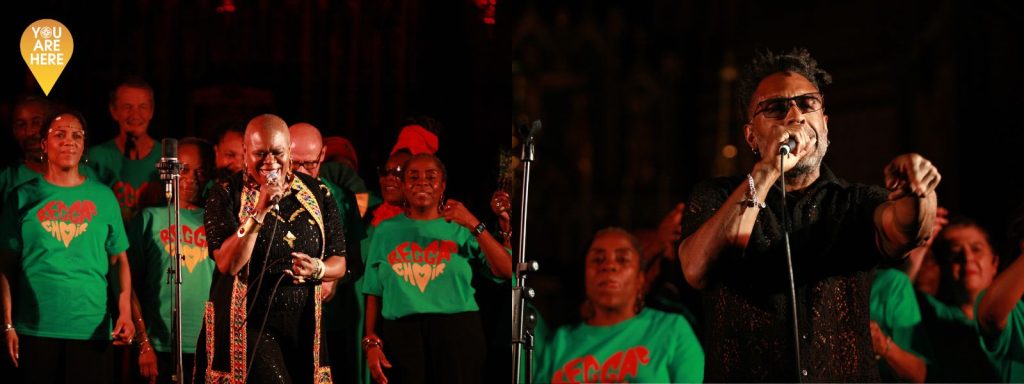
On 20 June 2025 we held Reggae Stories as part of the Windrush 2025 celebrations, attracting an enthusiastic audience of over 200 people. Co-curated by DJs and promoters Virginia Wilson and Darryl Clarticus, the event marked the 76th anniversary of Windrush with a powerful evening of roots, rhythm, and remembrance. Through music, storytelling, and shared history, the night celebrated the cultural legacy of the Windrush generation and its ongoing influence.

Watch highlights and full performance videos from Omar, Lorna Gee and the Reggae Choir below (Film by TK The Ancient Ways)

Reggae Stories Highlights

Omar Full Performance

Lorna Gee Full Performance

Reggae Stories Full Performance

Reggae Stories was generously supported by Near Neighbours Windrush Day Grant Scheme 2025, and National Lottery Heritage Fund as part of the You Are Here project

For Sudan

You Are Here Heritage Events: For Sudan

On 10 June 2025, we welcomed a vibrant cross-section of the Sudanese community to the first heritage event in our You Are Here project series, funded by The National Lottery Heritage Fund. The evening was co-curated by leading Sudanese artists Waleed Elgadi and Yassmin Abdel-Magied, and was part of Shubbak Festival 2025, the evening brought together powerful performances, artistic expression, and moments of reflection on Sudan’s rich cultural heritage.

Watch highlights from the event below (Film by Abdulisms)

Continuing the success of this programme we are excited to team up again with the Shubbak Festival to host our next For Sudan event on 20 November 2025. Further details to be released very soon!


For Sudan was generously supported by National Lottery Heritage fund as part of the You Are Here project

We are recruiting – Work at Grand Junction

Heritage and Volunteer Manager (Full time)

We are looking for a passionate and skilled person to join the Grand Junction team to lead our Heritage and Volunteer programmes.

We are looking for a passionate and skilled person to join the Grand Junction team to lead our Heritage and Volunteer programmes.
Grand Junction offers a busy heritage programme run in co-creation with the local community and volunteers. Volunteers are also able to fulfil roles in the areas of event stewarding, visitor experience, heritage tour guiding, administration, marketing, and research roles. You will be responsible for managing the volunteering offer to create a successful volunteering experience. Working with volunteers and the local community you will deliver an eclectic, high-quality heritage offer, suitable to the needs of the local community as well as wider audiences.

Your particular focus will be on the You Are Here project, funded by the National Lottery Heritage Fund. The project focuses on the creation of digital outputs to explore the heritage of local community groups, alongside that of our Grade I Listed building and local area.

If you think this could be you, please read the full job description and get in touch with us if you would like to discuss the role further.

This post is made possible through funding from National Lottery Heritage Fund.
Salary is £35,000

Applications close at 10am on 9 June 2025

To apply please read the job description and person specification closely, and complete and send the attached application form and equality and diversity form to recruitment@grandjunction.org.uk. Please note that CVs will not be accepted.

Grand Junction Heritage and Volunteer Manager JD & Person Specification

PDT Application Form – Grand Junction Heritage and Volunteer Manager

PDT Equal opps Monitoring Form

OLIVE JAR INTERVIEWS: SARAH JOY

Olive Jar Cast Interviews: Sarah Joy

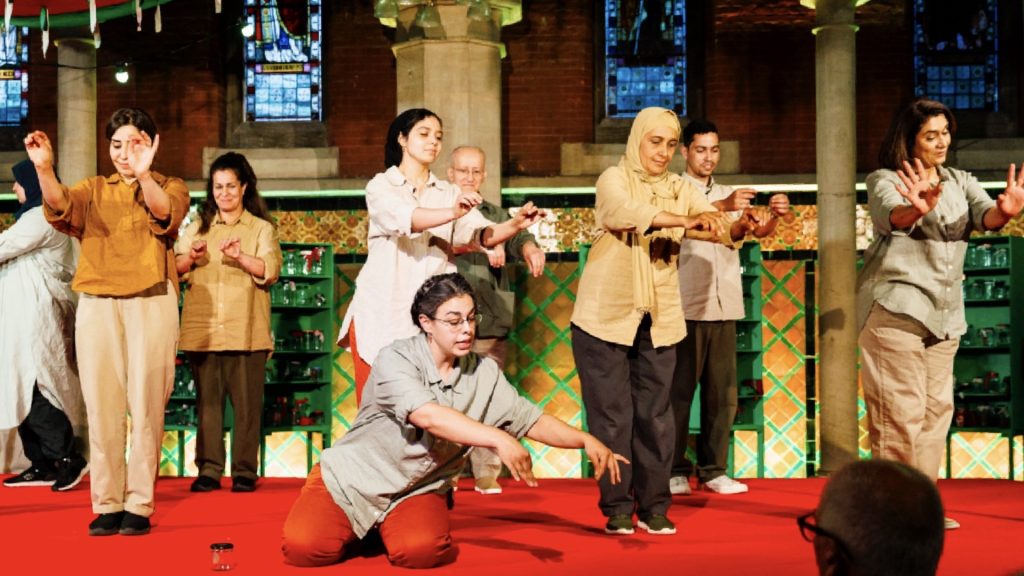
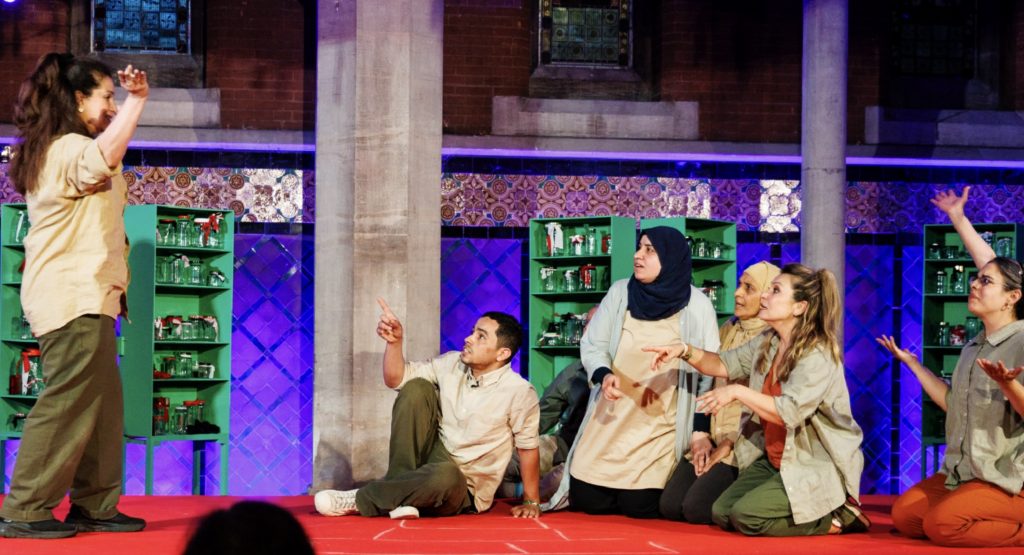
As Olive Jar’s limited streaming finishes tomorrow, we look back on our interview with Sara Joy and her experiences reconnecting with her heritage on the stage, delving into memory and tones of stories that populate the middle east and the greater diaspora. 


Who are you and what is your role in the show?

My name is Sarah-Joy or “Sah-rah” as people refer to me in this group, and my role in the show is playing myself. I am sharing my experience of being of mixed heritage, so I’m English, Welsh and Assyrian Iraqi, and it’s important to note I’m Assyrian- which is a modern day Christian minority from Iraq and I’m sharing my experience of not having grown up immersed in my heritage and how I’ve reconnected/ or found a way to connect with my heritage through food and cooking. I also play some supporting roles, I play the air strewetress in Majida’s scene, and I also play one of the sisters in Hafiza’s scene.

Who would you like to reach with the Olive Jar show?

I think everybody. Um I don’t think there’s a specific audience for this show. What was beautiful last time (in the summer show) that people could relate who haven’t seen representations of themselves in mainstream art and I suppose also what was beautiful that it was a very mixed audience ethnically, so it’s not that this is specifically for the Middle Eastern and North African (MENA) community, but that- those who are of Middle Eastern and North African heritage feel seen and represented, that was a lot of the feedback we got last year.

I supposed I’d really like to reach people who don’t have in depth understanding to the middle east and that we can be a gentle introduction to some of the complexities of what it means to come from a country impacted by war- because the majority of the cast are from countries impacted by war, and there’s a reason why we are all here today and displaced, and diaspora, war is that common theme unfortunately.

Do you hope that part of that audience you will reach will be inspired to reconnect to their heritage, like yourself? 

Yes, yes, because it is, it is complex growing up mixed heritage, it is also complex growing up being mixed raced and not within (that reflecting your heritage)- you know there’s colourism within a lot of non-european groups, because I’ve been asked pretty much my whole life, where am I from, even with a very BBC English accent and so I’m constantly reminded that- I’m not from here, even though I’m born here, and I am English. It really depends who I am speaking to and where somebody is from is where they perceive I’m from. And so, I hope-yeah I did have some audience members come up to me last year and thank me for what I shared because my journey with my heritage has been a really independent one, it’s not been a journey that has been supported by immediate family, by my mother or my sister. And I don’t want to speak on my sister behalf, but she has a really different experience, she doesn’t get asked where she is from a lot, and so our relationship with our heritage is unique to each of us.

So yeah I hope it does inspire, it is one of the main reason I did this play as well, as I’m actively wanting to step into spaces that are for people of colour, that are for Middle Easterns, also to represent a non muslim community that’s from the Middle East- to help educate people that, you know, the middle east is a tapestry of culture, it’s not just a monolith, and that in itself has been a challenge. You know going through school, having Middle Eastern friends who are very unaware of how rich our culture is back home because they are born here (are second generation immigrants) and you know the muslim culture is the predominant culture that we are told about or can see.

How has it felt taking part in this project and how have you changed over the course of this show? 

One of the (other) reason’s I joined the show is cause I wanted to understand what inherited strengths and traits I had that I wasn’t aware of. Because I work with a mental health-like independent advocacy and I talk about health and equalities that people can experience, communities experience, what the health statistics are that projected onto communities and why? In one of the last public conversations I was part of I said I actually I was fed up of hearing about the negative statistics, and actually we need to change what were researching, to stop looking for the obvious data that is going to tell you that certain groups are going to die 20 years younger then “average”. So I said why aren’t we researching inherited strengths, why is it that communities have managed to survive and thrive and create culture within society, within a system that was strategically built for them not to do so.

That’s what I want to know, I want to know wow what do I have within me that I don’t even know that is there and so one thing I have noticed is that Middle Eastern women are strong, they are assertive, they get on with it, and that was something that I over the last how many years have almost tried to undo in myself as it’s seen as… maybe problematic. To be that “controlling”, it can feel very controlling, but actually to be within a Middle Eastern majority space and go…oh…this is normal here. So this is something that I don’t have to teach myself out of doing, if it doesn’t serve me in certain situations, then maybe that’s something I, you know, that I won’t bring to the table. But, it’s an inherited strength, and understandably, cause if you have had so much upheaval in your life and uncertainty you know, being Iraqi, for the last 100 years has been challenging, so I can understand that taking control of a situation where there’s so much uncertainty is actually a really powerful tool.  But when your not in survival mode and there’s a level of certainty and routine in your life, maybe that tool doesn’t need to come out as much.

That’s one thing I have learnt, and I’m proud of- and food of course, that’s what my story is about. It’s just been beautiful sharing food and tactility, I’ve really missed being- I miss my family, I miss having tactility, and I- I’m not that tactile with people anymore- but we are…here, so I’ve really missed that. It’s also brought back memories that I didn’t know I had, which again, my scene is about, but that’s happening again here, there’s a special way that Iraqi click with their hands, and I hadn’t seen that for like…you know, 20 years, and suddenly I was like 5 years old remembering my dad trying to teach me how to click…umm… so it’s been a really important journey for me…just on like a neurological level, that’s amazing to understand that there are memories that we hold that we can forget..um so it’ so important to our cultural identity and…and this has just been an opportunity for me to, to be in “that” without realizing, so maybe I’ll leave it there.

Interview conducted by Anayis N. Der Hakopian

We thank our lovely cast for their interviews, insights and stories they have shared from the Olive Jar. You can catch Sarah Joy’s mystic illustrated steps in cooking dolma and enjoy the many threads that make this beautiful piece so full of life. 
OLIVE JAR INTERVIEWS: LANA

Olive Jar Cast Interviews: Lana

Still reflecting on the Olive Jar performance? We have a few more interviews from our run in Spring- and keep reading to find out when and how you can return the magic of the Olive Jar stories. 


Who you are and what is your role in the show?

My name is Lana and I am originally from Iraq, and my story will be talking about the (my) experience that happened in the war when I was in Iraq and how that was/would look like.

Why do you think it’s important to tell your narrative and discuss what you’ve been through?

I think this is a very good opportunity to make others hearing about- you know, what we went through, what’s the experience we coming from. Because when I come to the UK I lived here, like I’m part of this country but is- I have my own experiences, my own culture, my identity, and that was a really good opportunity for me to share this experience so others will know about what we went through, what history went through, what experiences we went through, so it’s really a pleasure for me to share this with others.

Do you have a favorite moment in the play?

I enjoyed every moment in the play, whether like talking about my story or whether being part of the others stories so we were really a team, team work, especially when we were performing with my (friend), Phayaphi, the same we were sharing similarity of the experiences, but (also) different experiences we went through (in Iarq). We felt like we were one in one story.

Do you think you’ve changed since the first production?

Yes, yes definitely I..The first time when I joined the project, I wouldn’t think I would be on stage, very like…kind of a shy person and like I don’t feel confident to share this, especially sharing my own story with others. So it’s a bit- getting experience through that (this performance), I felt like I grow and develop and I get lots of experiences through that journey. Yes, yes indeed, I learnt a lot and I felt like- yeah I grow a lot since then.

Do you have a particular motif (dolma, tea etc) that you like the most?

Everything actually, especially the bread we were talking about the bread (in Lana’s and Phayaphi’s Olive Jar story), the Iraq bread, reminding of my heritage, my country, and that’s very traditional, iraq bread and the smell that we were talking about it. It’s really like I’m smelling it! It was kind of really a different experience, like a 3D show, cause we had performance, and we had the food there so that people can test it, feel what we went through. This, like everything, was really special. But yes (the motif I connect with the most) is the Iraqi bread.

Who do you want ‘Olive Jar’ to reach and connect with?

Honestly I want everyone, reaching different groups, whether people share the same similar experiences and would know about what I was talking about, they went through the same journey I went through, who would really connect. Like this what Phayaphi mentioned at the end (of the play) we really had connected with that. But also I was really keen to the others, like from different backgrounds, to hear our stories and understand what we went through, the journey we went through.

So I want them to know about these stories, maybe for others heard from social media, heard from news, but they didn’t went through the similar. It is something (Olive Jar) different for them to think about twice, like about what they are, when they are being judgemental, or like you know, having a stereotype about things. Maybe this is a good time for them to think more about  it, and to even read about it, what we went through, so I’d like to reach this group from different cultures as well.

Any last comments to the audience, to the team?

I want to thank everyone who has been part of this journey, because I feel like this is an amazing journey I have had. From all, from everybody who had a role, like my colleagues who have been in the same position, the grand junction, the staff, like everybody! It was really a pleasure to work with them- I think this is the first, not I think- this is the first, an experience I won’t go through again, it means a lot for me. I would like to thank everybody who has been a part of this journey.

Interview conducted by Anayis N. Der Hakopian

Did you miss ‘Olive Jar’ the second time around? Make sure to join us online realm on oMonday June 10th to watch last year’s summer performance for a limited time only!